Chuzhou Optimized Copper Foil Processing for Lithium Battery
Curing treatment: deposit a layer of dense metal copper in the nodular particle gap of the roughening layer, increase the contact surface between the roughening layer and the wool foil substrate, and reduce the roughness of the roughening layer surface. Microscopically, after rough surface roughening treatment, the foil surface is uneven and undulating greatly, while after curing treatment, the copper foil surface is relatively flat. After curing treatment, although the roughness is reduced, the bonding strength between the treatment layer and the insulating substrate material is improved due to the increased contact area between the roughened layer and the wool foil, which fundamentally eliminates the delamination between the treatment layer and the wool foil.
Chuzhou Optimized Copper Foil Processing for Lithium Battery
With the development of high-density wiring technology for low profile copper foil multilayer boards, the traditional type cannot meet the needs of manufacturing high-precision printed circuit boards. Therefore, a new generation of copper foils, low profile (LP) and ultra-low profile (VLP), have emerged one after another. Compared with ordinary electrolytic copper foil, LP copper foil has fine crystal (2/zm), equiaxed grains, no columnar crystals, lamellar crystals, flat prisms and low surface roughness.
Chuzhou Optimized Copper Foil Processing for Lithium Battery
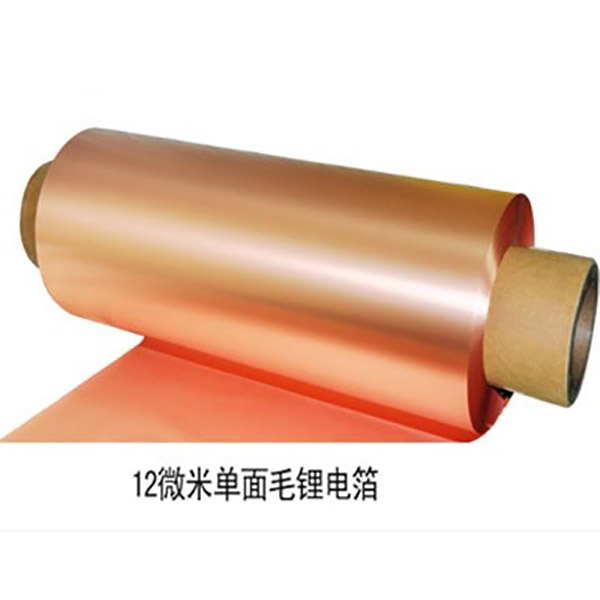
Copper foil can also be divided into: single-sided treatment (single-sided hair), double-sided treatment (double-sided thick), smooth treatment (double-sided hair), double-sided light copper foil (double-sided hair) and very low profile copper foil (VLP copper foil) according to the surface condition. Post copper foil can be divided into electrolytic copper foil and calendered copper foil according to different production methods.
Chuzhou Optimized Copper Foil Processing for Lithium Battery
During the production of copper foil, tiny foreign matters are adhered on the surface to form spots with different colors from the surface, which are called stains. Judgment method: use macroscopic inspection to judge whether it is a waste product, a secondary product or a finished product according to the number and area of stains and the impact on product quality.