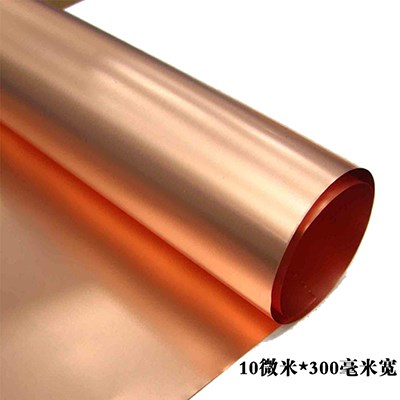
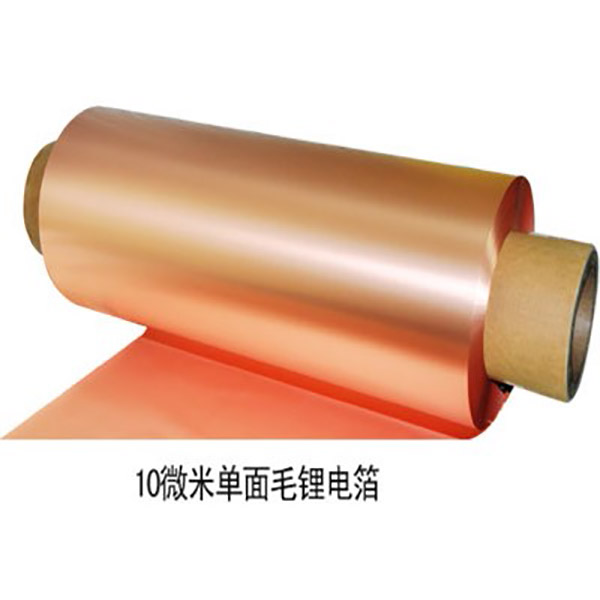
Yangjiang optimized heat dissipation copper foil processing
The production process of electrolytic copper foil is simple. There are three main processes: solution raw foil, surface treatment and product slitting. The production process seems simple, but it is a production process that integrates electronics, machinery and electrochemistry, and is particularly strict with the production environment. Therefore, the industry does not have a set of standard and universal production equipment and technology, and each manufacturer shows its own ingenuity, which is also an important bottleneck affecting the improvement of domestic production capacity and quality. In addition, the different requirements of customers have also resulted in the waste of many intermediate products copper foil in manufacturing. The one-time input-output ratio is even less than 80%, and these copper foils have to be manufactured again, wasting resources.
Yangjiang optimized heat dissipation copper foil processing
Excellent tensile strength and elongation High tensile strength and elongation under normal conditions can improve processing ability, enhance rigidity and avoid wrinkles to improve production qualification rate. High temperature extensibility (THE) copper foil and high tensile strength copper foil at high temperature can improve the thermal stability of printed boards and avoid deformation and warpage.
Yangjiang optimized heat dissipation copper foil processing
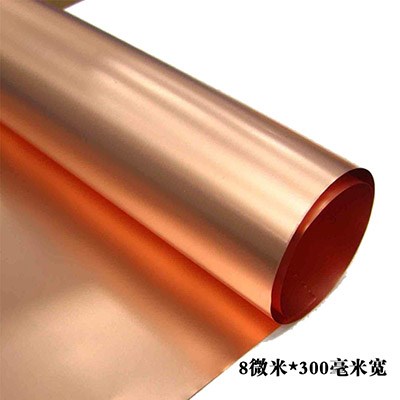
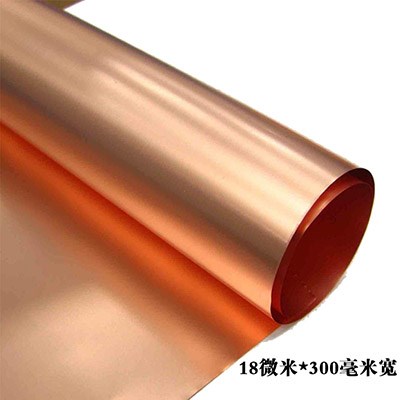
Most copper foils used for domestic printed boards are 35um thick, and 50um copper foils are used as transition products. In high-precision hole metallized double-sided or multilayer board manufacturing, thinner than 35um copper foils, such as 18um, 9um and 5um copper foils, are expected. Some multilayer boards use thicker copper foil, such as 70um.
Yangjiang optimized heat dissipation copper foil processing
Silane coupling agent treatment: after anti oxidation treatment, the surface is sprayed with silane, which can improve the oxidation resistance at room temperature on the one hand; On the other hand, in high temperature pressing plate, silane can better combine copper foil and resin substrate through coupling, and improve peel strength. Post treatment process - drying. In order to prevent the harm of residual moisture, it must be dried at not less than 100 ℃ later, and the drying temperature cannot be too high.
Yangjiang optimized heat dissipation copper foil processing
Copper clad laminate is the base plate for manufacturing PCB, which is an important type with large amount of materials. The manufacturing process of copper clad laminate is to impregnate glass fiber cloth, glass fiber mat, paper and other reinforcement materials with epoxy resin, phenolic resin and other adhesives, dry them to the first stage at appropriate temperature, obtain pre impregnating materials (referred to as impregnating materials), and then stack them according to process requirements and copper foil, The required copper clad laminate is obtained by heating and pressurizing on the laminator.
Yangjiang optimized heat dissipation copper foil processing
Small dirt, small exclamation mark. During the production of raw foil, the hair side is upward, and the dirt in liquid and air all fall on the hair side, which is printed on the smooth side after rolling. The reason is that the stains on the cathode roll are not dried. The surface temperature of the cathode roll is only 50 degrees, and the air temperature in the workshop is generally about 25 degrees. The surface hairiness is very good. The dirt itself has water, and the drying time is only 2-3 minutes. Therefore, the dirt on the copper foil cannot be completely dried.