Huai'an Preferred Antenna Copper Foil Price
If the rough surface and pinholes appear at the same time when there are stains on the rough surface, it indicates that the stains are caused by the dirty electrolyte, and the dirt is attached to the copper foil in the electrolytic cell. If there are stains on the rough surface, the copper foil is not rough and there are no pinholes, it means that the workshop production environment is dirty, the air contains dust, or other suspended impurities fall on the surface of the copper foil.
Huai'an Preferred Antenna Copper Foil Price
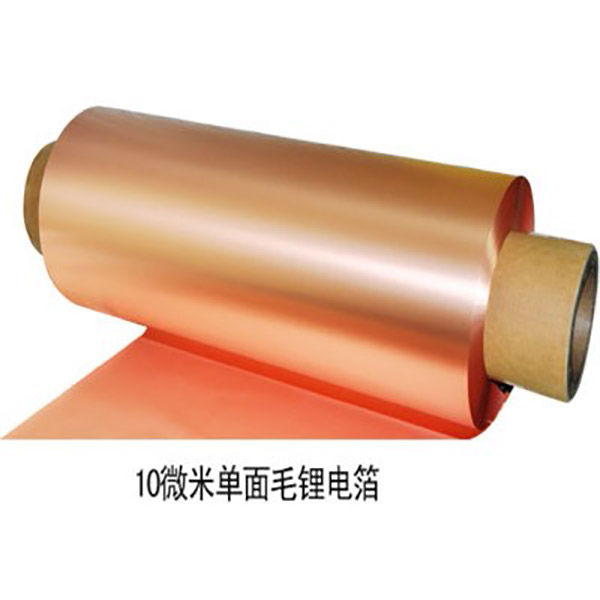
Copper foil can also be divided into: single-sided treatment (single-sided hair), double-sided treatment (double-sided thick), smooth treatment (double-sided hair), double-sided light copper foil (double-sided hair) and very low profile copper foil (VLP copper foil) according to the surface condition. Post copper foil can be divided into electrolytic copper foil and calendered copper foil according to different production methods.
Huai'an Preferred Antenna Copper Foil Price
Although the thickness of copper foil gradually becomes thinner, power battery manufacturers use 6 μ When the product is less than or equal to m, the coating machine, winding machine and other key equipment as well as the technological level cannot solve the problems such as wrinkles, belt breakage and high-temperature oxidation encountered in the production process, which leads to the inability to mass produce ultra-thin copper foil with high yield.
Huai'an Preferred Antenna Copper Foil Price
At the same time of thinning, it is also necessary to improve the tensile strength, elongation and other indicators, otherwise it is easy to cause copper foil fracture, affecting the safety of the battery. Therefore, it is the general trend that the future use will be more light and meet the above indicators.
Huai'an Preferred Antenna Copper Foil Price
During the production of copper foil, tiny foreign matters are adhered on the surface to form spots with different colors from the surface, which are called stains. Judgment method: use macroscopic inspection to judge whether it is a waste product, a secondary product or a finished product according to the number and area of stains and the impact on product quality.