Xuzhou Optimized Lithium Copper Foil Processing
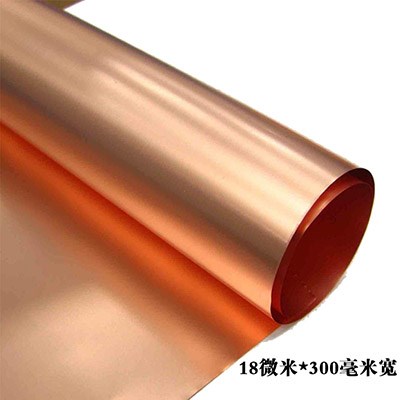
Although the thickness of copper foil gradually becomes thinner, power battery manufacturers use 6 μ When the product is less than or equal to m, the coating machine, winding machine and other key equipment as well as the technological level cannot solve the problems such as wrinkles, belt breakage and high-temperature oxidation encountered in the production process, which leads to the inability to mass produce ultra-thin copper foil with high yield.
Xuzhou Optimized Lithium Copper Foil Processing
If the rough surface and pinholes appear at the same time when there are stains on the rough surface, it indicates that the stains are caused by the dirty electrolyte, and the dirt is attached to the copper foil in the electrolytic cell. If there are stains on the rough surface, the copper foil is not rough and there are no pinholes, it means that the workshop production environment is dirty, the air contains dust, or other suspended impurities fall on the surface of the copper foil.
Xuzhou Optimized Lithium Copper Foil Processing
The foil of the clad plate can be copper, nickel, aluminum and other metal foils. However, considering such factors as the conductivity, solderability, elongation, adhesion to the substrate and price of gold, it is considered appropriate except for special purposes.
Xuzhou Optimized Lithium Copper Foil Processing
The calendered copper foil is made by repeated rolling annealing process of copper ingot based on the principle of plastic processing. Its internal structure is lamellar crystal structure, and the product has good ductility. At present, it is mainly used in the production of rigid circuit boards, while the rolled copper foil is mainly used in flexible and high-frequency circuit boards.