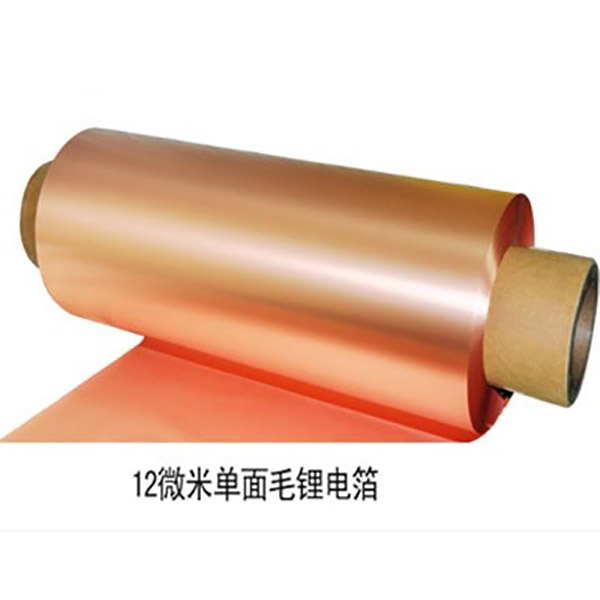
Huaibei chooses the price of conductive copper foil
Most copper foils used for domestic printed boards are 35um thick, and 50um copper foils are used as transition products. In high-precision hole metallized double-sided or multilayer board manufacturing, thinner than 35um copper foils, such as 18um, 9um and 5um copper foils, are expected. Some multilayer boards use thicker copper foil, such as 70um.
Huaibei chooses the price of conductive copper foil
Electrolytic copper foil is made by dissolving copper into copper sulfate solution, electrodepositing the copper sulfate electrolyte under the action of direct current in special electrolytic equipment to make the original foil, and then carrying out surface treatment, heat-resistant layer treatment, oxidation prevention treatment and other surface treatment processes on the original foil according to customer requirements.
Huaibei chooses the price of conductive copper foil
The air supply of general air conditioning has a large impact. For the stains caused by the dirty electrolyte, the filtering of electrolyte should be strengthened. After being transferred from the electrolytic cell, the copper foil must be washed with electrolyte, because the surface of the copper foil is attached with organic matter or other impurities. The water pressure of copper foil washing must have enough pressure and a certain amount of water.
Huaibei chooses the price of conductive copper foil
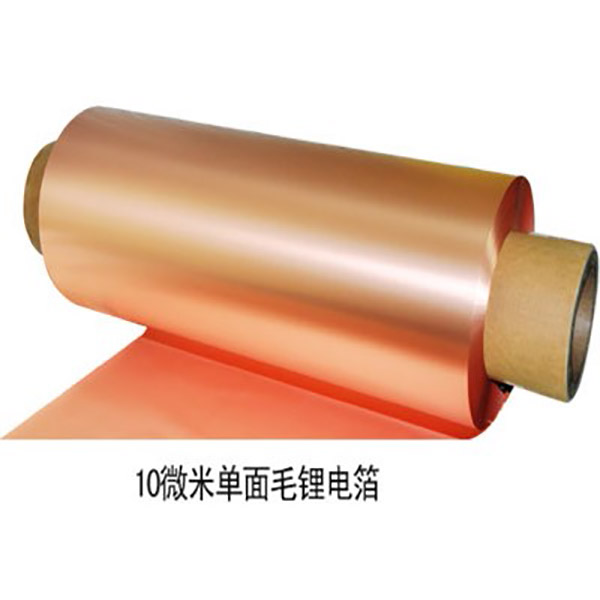
Definition of electrolytic copper foil: it is formed by depositing copper ions in electrolyte on the round cathode roller of smooth rotating stainless steel plate (or titanium plate). The surface close to the cathode roller is called smooth surface, and the other surface is called rough surface.
Huaibei chooses the price of conductive copper foil
Curing treatment: deposit a layer of dense metal copper in the nodular particle gap of the roughening layer, increase the contact surface between the roughening layer and the wool foil substrate, and reduce the roughness of the roughening layer surface. Microscopically, after rough surface roughening treatment, the foil surface is uneven and undulating greatly, while after curing treatment, the copper foil surface is relatively flat. After curing treatment, although the roughness is reduced, the bonding strength between the treatment layer and the insulating substrate material is improved due to the increased contact area between the roughened layer and the wool foil, which fundamentally eliminates the delamination between the treatment layer and the wool foil.