Processing of copper foil for Shanwei Optimum Battery
In order to improve the bonding strength of copper foil to the substrate, oxidation is usually used (that is, after oxidation treatment, a layer of copper oxide or cuprous oxide is formed on the surface, which improves the bonding strength of copper foil and substrate due to the polarity) Or roughen the copper foil (a roughened layer is generated on the surface of the copper foil by electrochemical method, which increases the surface area of the copper foil and improves the bonding strength between the copper foil and the substrate due to the anchoring effect of the roughened layer on the substrate).
Processing of copper foil for Shanwei Optimum Battery
Copper foil is divided into calendered copper foil and electrolytic copper foil according to the preparation process, which accounts for the vast majority of the market. According to the Copper Foil Branch of China Electricity Association (CCFA), at present, domestic manufacturers mainly focus on the production of electrolytic copper foil. In 19 years, the domestic production capacity of electrolytic copper foil is expected to be close to 600000 tons, while that of rolled copper foil is only about 10000 tons.
Processing of copper foil for Shanwei Optimum Battery
Galvanizing barrier layer: After the rough surface is galvanized, a barrier layer is formed to improve the oxidation resistance of the copper foil in natural air. After galvanizing, the appearance will look gray. After a period of storage, the gray will turn into copper yellow. The more zinc is plated, the more yellow the copper foil will be.
Processing of copper foil for Shanwei Optimum Battery
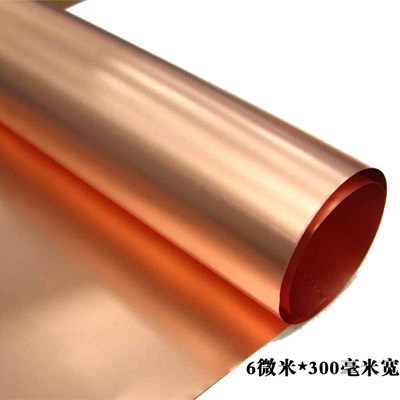
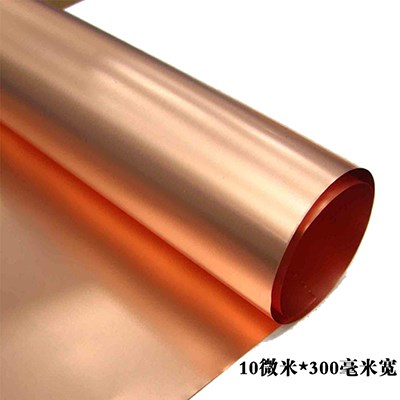
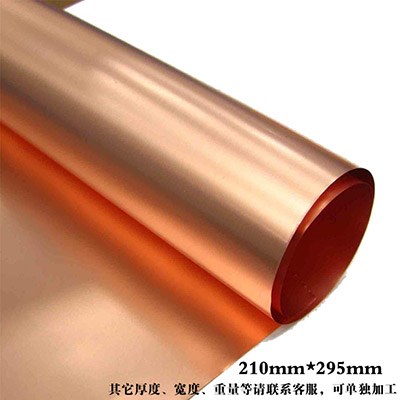
Most copper foils used for domestic printed boards are 35um thick, and 50um copper foils are used as transition products. In high-precision hole metallized double-sided or multilayer board manufacturing, thinner than 35um copper foils, such as 18um, 9um and 5um copper foils, are expected. Some multilayer boards use thicker copper foil, such as 70um.